
Fayette Weekly Arrest Log
The Fayette County Sheriff’s Office stands as the main county source for arrest records. Its site offers no seven-day list, no 72-hour blotter, no searchable jail roster, and no booking-photo gallery. An inmate handout points current-custody questions to VINELink. That service shows who is in custody now. It does not hold a historical list of people booked during a chosen week.
That gap shapes the weekly search. A full log cannot be rebuilt from scattered press releases. Vandalia Police, St. Elmo Police, the Sheriff, Illinois State Police, and other agencies all create arrest or incident records. The jail opens a booking record when someone is processed. Local publishers choose selected events to report. Every record has a different custodian. None of those partial views adds up to the county’s full blotter.
Read Fayette Blotter Records
Work backward from the week and the agency rather than forward through a feed. Keep a short date range and the event location at hand.
- Check the Sheriff’s official page for a press notice or agency link tied to the dates.
- Review official municipal police sources when Vandalia or St. Elmo handled the incident.
- Search local reporting by date, place, and agency, but label it as selected news.
- Ask the arresting agency for its incident or arrest report and the jail for the booking record.
- Use the Fayette County Circuit Clerk or Judici to learn what happened after charges were filed.
One person can surface in several systems. That does not mean several arrests. Compare event dates, agencies, case numbers, and booking identifiers before counting anything twice. A report date can differ from the arrest date, and both can differ from the day a publisher posted a story.
Fayette Arrest Log Fields
Fayette County publishes no official arrest log format. These fields are useful when requesting or comparing an arrest report, booking record, press release, and court file.
| Field | How to read it |
|---|---|
| Name | Confirm identity and avoid merging same-name people. |
| Arrest date and place | The reported event, not necessarily the booking time. |
| Arresting agency | The likely custodian of the incident or arrest report. |
| Booking date or ID | The jail intake event and record key, when available. |
| Charge | A preliminary charge that may later change. |
| Custody change | Release or transfer, which is not a court disposition. |
| Court case | The later record for filed charges and outcome. |
| Publication date | When news or another source posted its account. |
Photos make a shaky log field. Fayette County publishes no official gallery. Illinois law mentions a photograph only “when and if available” within a specific news-media access rule. Even a lawfully released image is a booking photo tied to a single moment.
Weekend Fayette Arrest Reporting
Weekend arrests stretch across records days. A Friday-night arrest may be booked later, reported by an agency on Monday, and reach a court system only after filing. Fayette County posts office hours of Monday through Friday, 8:00 a.m. to 4:00 p.m., excluding federal and local holidays. That schedule shapes when records answers arrive. It does not set when jail staff finish booking.
No county posting promises a weekly refresh on a set day. So search a range wider than the event day. Quiet weekends prove nothing. An arrest can happen without any public word for days. Note the date each source was last checked, since timing matters when pieces trickle in.
Fayette News Blotter Pattern
Fayette arrest news travels through local outlets. Coverage is selective. Vandalia Radio has reported Sheriff and police releases, while The Leader-Union has carried periodic Sheriff reports and individual arrest stories. Regional outlets such as WAND and The XRadio sometimes cover larger incidents. None of these publishers claims to list every booking. The Vandalia Radio report on local assistance to the FBI shows how one selected event enters the local news flow.
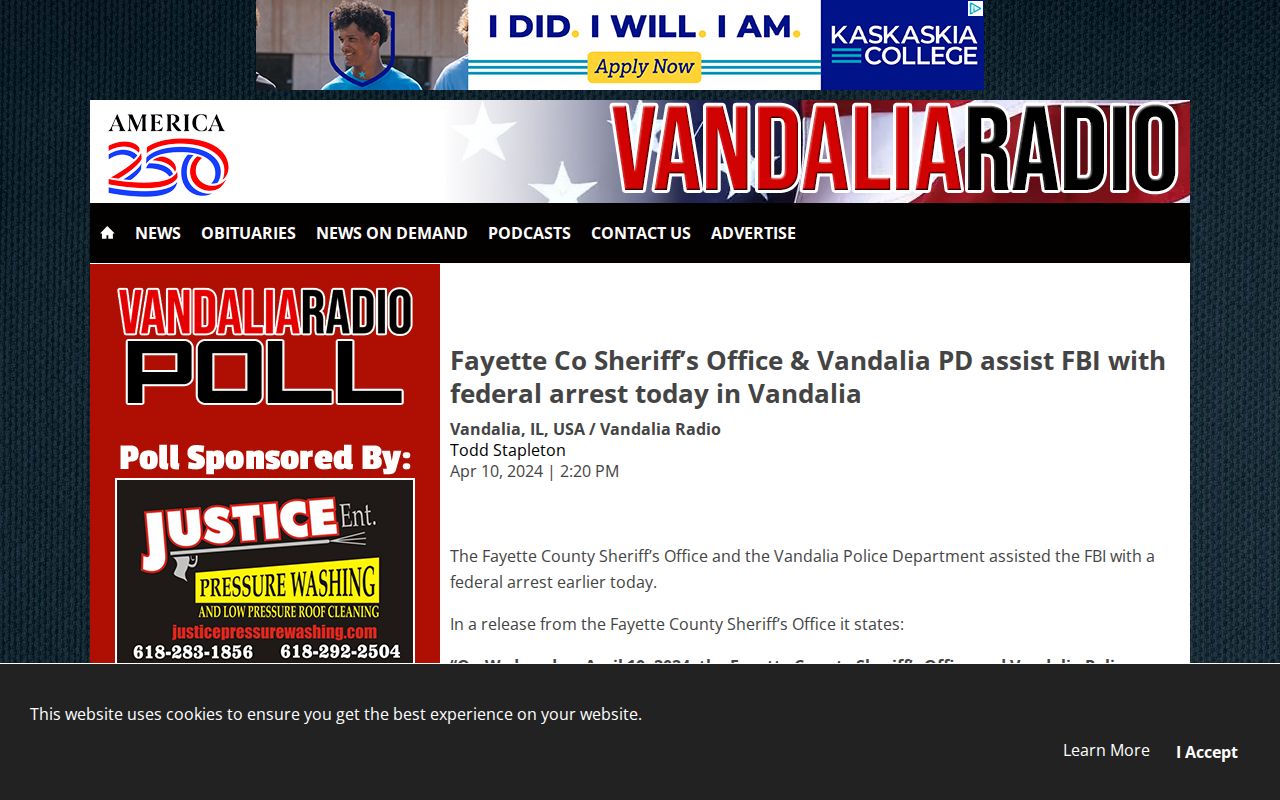
One story is a publication route, not a county arrest list. News wording reflects only what was known at posting time. Details can change afterward. Look for named sourcing and keep the publication date. Then go to the originating agency for the full report. The Circuit Clerk holds any later case action.
Fayette Arrest Archives
No booking-retention schedule appears on the Sheriff’s site. Illinois rules bar a local agency from destroying public records at will. Disposal needs the appropriate records commission’s approval, and retention depends on each record’s content, purpose, and approved series.
For a past week, send a focused FOIA request. Address the Sheriff at fcso@fayettecountyillinois.gov or the arresting city agency. Ask for the booking sheet, arrest report, or jail log entry for a named person and a date range. The Sheriff’s fee schedule is friendly. Inspection is free. The first 50 black-and-white pages cost nothing, later pages run 15 cents each, and CDs or DVDs cost 35 cents. Exempt or restricted material can still be withheld.
The Illinois Newspaper Project’s Fayette search offers a separate historical newspaper route.
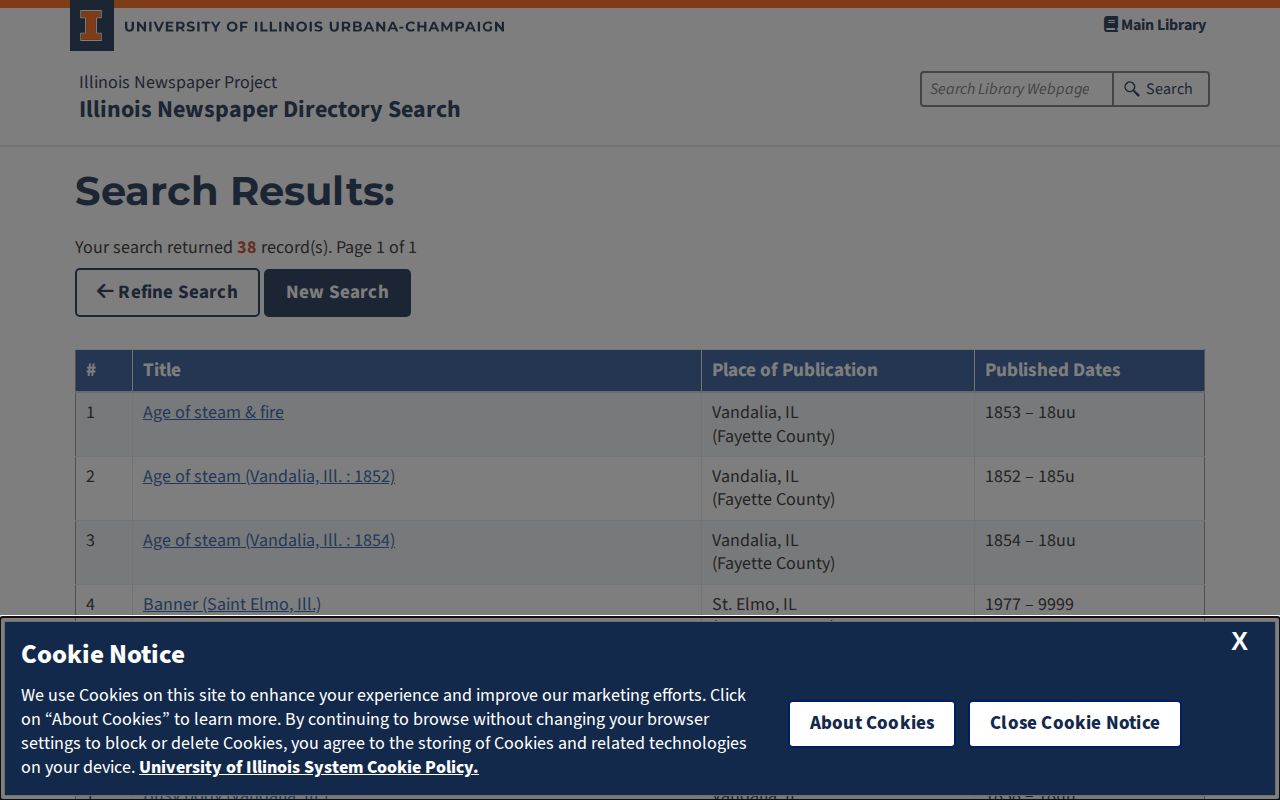
Those newspaper holdings help locate older reporting. They are not a current jail database. They also cannot prove a booking record still exists. Historical sheriff materials described by Illinois archives can include jail registers and reports, useful for research yet no promise that a modern mugshot or recent weekly log sits online. Court, jail, news, and third-party archives each follow their own retention and correction rules.
Verify Fayette Arrest Outcomes
What actually happened after an arrest in Fayette County? The Circuit Clerk holds the answer. That office keeps the circuit-court records. Most are open to the public. Juvenile, adoption, impounded, and sealed files are the exceptions. The clerk posts an online case-information entry point through Judici. Visitors can also inspect files at the office, or use a public-access computer there during posted hours.
A disposition is the later court result in a case. It might be a dismissal, a conviction, supervision, probation, or a plea. Read it next to the booking entry, never in place of it. A release from the Fayette County jail settles nothing on its own. A transfer to the Illinois Department of Corrections only means state custody has taken over.